

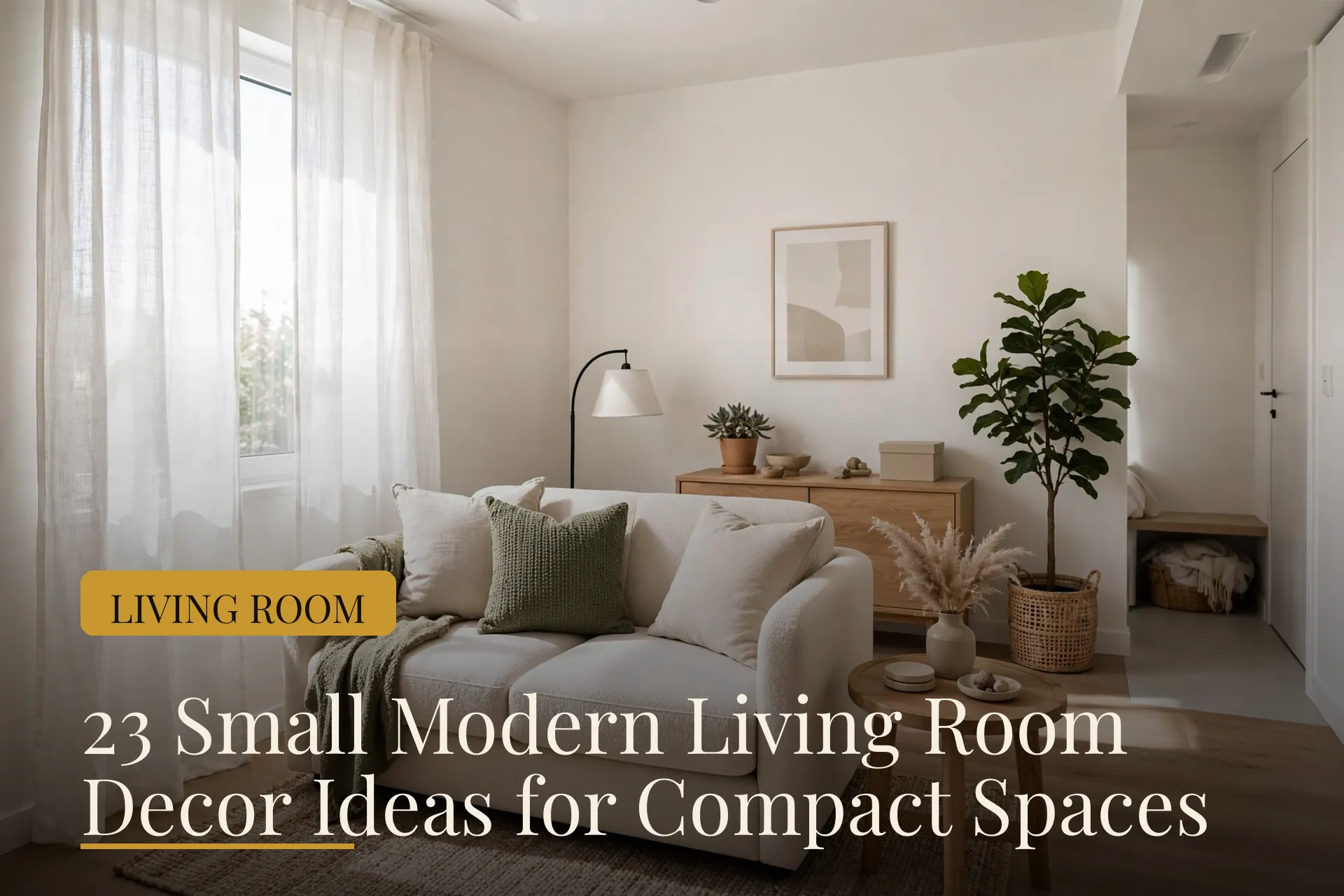
These small modern living room decor ideas prove that a compact space can still feel open, stylish and completely livable. The trick is choosing pieces that work harder, keeping the palette calm and letting light do the heavy lifting. Modern style is a natural fit for small rooms because clean lines and uncluttered surfaces make any space feel larger. You do not need to knock down walls to gain a sense of roominess. Smart furniture, thoughtful layout and a light palette can open up even the tiniest living room.
In this guide you will find 23 practical ideas, from space saving furniture to clever layout moves that suit compact spaces. Each idea is easy to try and fits a real world budget. Measure your room before shopping so every piece earns its place, and sketch a simple floor plan on paper to avoid costly returns. Start with the ideas that solve your biggest frustration and watch your small living room open up.
1. Choose a Small Scale Sofa
Pick a sofa made for apartments, with slim arms, a shallow seat and raised legs. A compact two seater seats two people without swallowing the room. Raised legs let you see floor underneath, which tricks the eye into reading more space. Measure before you buy so the piece fits the wall it will live on. Apartment sized sectionals with a reversible chaise also work well in corners. Keep the back low so sight lines stay open across the room.
2. Mount the TV on the Wall
Wall mounting frees up floor space that a media console would eat. Run cables through a cord cover painted to match the wall for a clean look. Under the TV, a slim floating shelf holds the few things you actually need. The result is a media zone with almost no footprint. Choose a tilting mount so glare never ruins movie night, and keep a small basket nearby for remotes and game controllers.
3. Use a Round Coffee Table
Round tables have no sharp corners to bump into and they improve flow in tight layouts. A diameter around 30 inches suits most small seating groups. Choose one with a lower shelf for extra storage. The soft shape also contrasts nicely with a rectilinear sofa. Pick a table with a lower shelf for books and throws, and keep the diameter near 30 inches so knees clear it easily.
4. Go Light With Color
Pale walls, light upholstery and a light rug bounce daylight around a small room. You do not need all white. Warm beige, soft gray and pale oak give the same airy effect with more warmth. Keep the ceiling bright white to lift the whole space. Repeat the lightest tone on curtains and rug so the room reads as one continuous bright space.
5. Hang Curtains High and Wide
Mount the rod close to the ceiling and extend it past the window frame. The fabric draws the eye up and out, making the window and the room feel bigger. Light, airy fabrics keep the effect going. When open, the panels should clear the glass fully. Choose light airy fabrics that stack tightly, and let panels just brush the floor for a tailored look.
6. Pick Leggy Furniture
Sofas, chairs and consoles on visible legs reveal more floor and feel lighter. Heavy pieces that sit flat on the ground visually shrink a small room. When you can see under and around furniture, the space breathes. This one change can transform a cramped feeling room. Aim for at least four inches of visible leg so the floor reads as continuous beneath each piece.
7. Use Mirrors Strategically
A large mirror opposite the window doubles light and view. In a small modern living room, one big mirror beats several small ones. Lean an oversized mirror against the wall for a relaxed, current look. Keep the frame thin so the mirror feels like a window. Angle the mirror slightly so it reflects the brightest window, and dust it often since smudges show fast.
8. Choose Multipurpose Pieces
A daybed works as sofa by day and guest bed by night. Storage ottomans hide blankets while offering extra seats. A drop leaf table serves as console until dinner time. Every piece in a small room should do at least two jobs. Before buying, list the two jobs each piece must do, and skip anything that serves only one purpose.
9. Keep the Rug Right Sized
A rug that is too small chops the room into pieces. In small rooms, go as large as the floor allows, with front legs of seating on the rug. One large rug unifies the layout instead of dividing it. Leave just a slim border of floor showing. Tape the outline on the floor with painter tape first, since guessing rug size leads to most returns.
10. Float One Side of the Room
You may not float all the furniture, but pull at least the main seating off the wall. Even a few inches creates shadow lines that add depth. The room will feel less like a box and more like a designed space. Try it and you will notice the difference instantly. Anchor the floated seating with a rug so the grouping feels intentional instead of adrift.
11. Add Vertical Storage
Tall, narrow bookcases draw the eye upward and use wall space instead of floor space. Style them with a mix of books and breathing room. A single tall unit often holds more than a wide low one. Anchor it to the wall for safety. Use the top shelves for rarely used items and keep daily books at arm height for easy reach.
12. Use Clear or Slim Side Tables
Acrylic or glass side tables disappear visually while holding your coffee. Slim C shaped tables slide over the sofa arm for laptop or reading use. Less visual bulk means a calmer small room. They are also easy to move when guests arrive. Wipe acrylic with a soft cloth to avoid scratches, and choose rounded edges in tight walkways.
13. Layer Lighting Instead of One Overhead
A floor lamp, a table lamp and a small accent light create depth in a small room. One harsh ceiling light flattens everything. Warm bulbs around 2700K keep the mood inviting. Put lamps on dimmers if you can for full control. Place one light source in each corner to erase dark pockets that make small rooms feel smaller.
14. Edit Decor Ruthlessly
In a small room every object counts. Keep surfaces to a few loved pieces and give each one space. If something does not earn its spot, move it to another room or let it go. Editing is free and it works immediately. Box up extra items for two weeks, and only bring back pieces you truly missed.
15. Choose a Cohesive Palette
Repeating two or three colors across furniture, textiles and art makes a small room feel intentional. Scattered colors chop the space visually. Cohesion reads as calm, and calm reads as spacious. Pick your colors once and commit. Carry the palette into adjoining spaces too, so the whole home flows and feels larger.
16. Use the Corners
An unused corner can hold a reading chair, a tall plant or a small desk. Corners are often wasted in small living rooms. Giving each corner a job makes the whole room work harder. A corner floor lamp also adds light exactly where you need it. A corner chair angled toward the room joins the conversation zone instead of feeling exiled.
17. Try a Monochrome Scheme
Decorating in shades of one color, like warm white through camel, feels serene and expansive. Without strong contrasts the eye glides across the room. Add texture through linen, wool and wood so it never feels flat. Tone on tone is a classic small space trick. Add one deeper tone in a throw or artwork so the scheme has a focal point.
18. Skip the Bulky Recliner
Oversized recliners eat floor space and dominate small rooms. A sleek accent chair with a separate ottoman gives the same comfort with a lighter footprint. Look for chairs with slim arms and open bases. Your walkways will thank you. Look for accent chairs under 30 inches wide with open bases that show floor beneath.
19. Style With a Few Large Pieces
One large artwork beats a cluster of tiny frames in a small room. A single big plant has more presence than five small pots. Fewer, larger items reduce visual clutter. Scale up with confidence in tight quarters. One oversized piece per wall is plenty, since crowding large items defeats the purpose. Let each large piece have breathing room on all sides.
20. Keep Pathways Clear
Leave at least 30 inches for main walkways through the room. Pushing furniture tight to the walls is not always the answer, but blocked paths make any room feel cramped. Good flow makes a small room feel easy. Walk the route yourself to test it. Push coffee tables a full 18 inches from the sofa so shins stay safe and traffic flows.
21. Use Light Wood Tones
Pale oak, ash and birch keep a small modern room bright. Dark heavy woods can feel oppressive in tight quarters. Mix light woods with white and soft textiles for a fresh look with Scandinavian spirit. A light wood coffee table is a great start. Repeat the same light wood in two or three pieces so the finish feels deliberate.
22. Add a Pop of Color Thoughtfully
Small rooms can still handle bold color in small doses. A single rust cushion, a deep green chair or one vivid artwork adds personality. Keep the bold notes few so they stay special. One confident accent beats ten timid ones. Place the bold accent where the eye lands first, such as the main accent chair or artwork.
23. Make the Most of Natural Light
Keep window sills clear and choose sheers over heavy drapes. Clean glass and unblocked windows maximize every ray. Daylight is the best space enlarger and it costs nothing. Arrange seating to face the light when you can. Trim any bushes outside the window so nothing blocks the glass. Wash windows inside and out twice a year, since clean glass noticeably brightens a small room.
Frequently Asked Questions
1. How do I make a small living room look bigger with modern decor?
Stick to a light, cohesive palette and furniture with visible legs. Use mirrors to bounce light, hang curtains high and keep pathways clear. Fewer, larger accessories beat lots of tiny ones. Light and breathing room do most of the work. Paint the ceiling the same light color as the walls to erase visual boundaries.
2. What size sofa works best in a small modern living room?
A compact sofa around 72 inches wide with slim arms suits most small rooms. Shallow seats and raised legs keep it from feeling bulky. Measure your wall and leave room to walk around the piece comfortably. If you host guests often, look for a compact sleeper with a pull out mechanism.
3. Can a small living room still feel cozy and modern?
Yes. Layer soft textures like throws and cushions over clean modern shapes. Warm lighting at several heights adds comfort without clutter. A calm palette with one rich accent keeps the room inviting and current. A soft rug underfoot and one warm wood tone keep the modern look from feeling stark.
Small Room, Big Style
Small modern living rooms reward smart choices more than big spending. Use these 23 ideas to open up your space, one change at a time. The result will be a room that feels larger, calmer and unmistakably yours. Keep a short list of the ideas you love most and tackle them in order of impact. Even two or three changes can make the room feel brand new.