
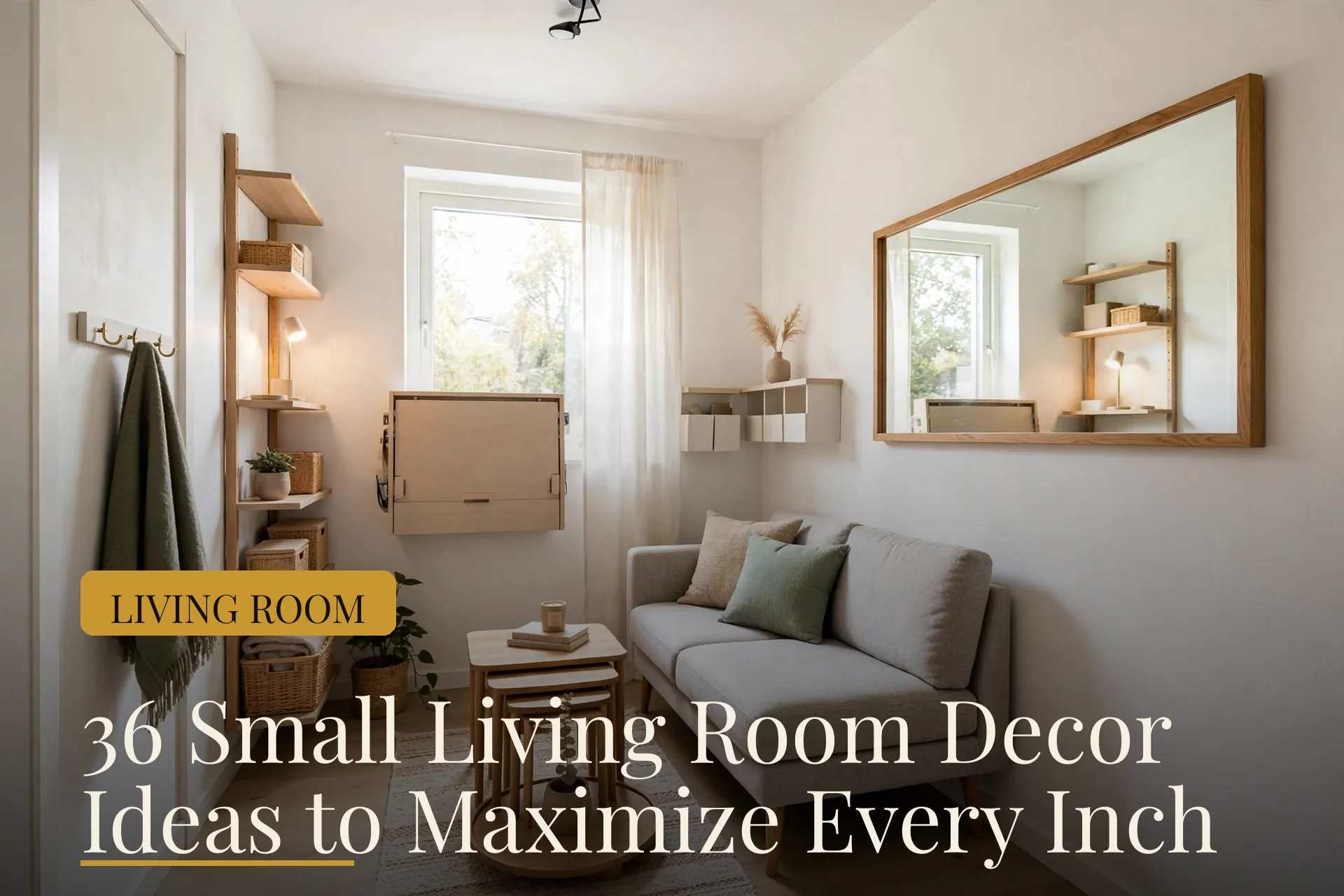
Small living room decor ideas are all about making the most of every square foot. A compact room can feel just as comfortable and stylish as a large one when you choose wisely. This guide shares 36 practical ideas for small living rooms, from furniture that fits to visual tricks that open up the space and maximize every inch. Each idea helps your room feel bigger, brighter and better organized.
Start with the ideas that solve your biggest challenges, such as seating, storage or light. Measure your room and sketch a simple plan before you shop, so every piece earns its footprint. Work through the list one change at a time. Even a handful of these ideas can make a compact room feel open, organized and beautiful.
1. Measure Before You Buy
Small rooms punish guesswork, so measure your space before shopping. Note door swings, window positions and walkway widths. Bring a tape measure to the store or shop with dimensions handy. The right fit starts with real numbers. Record the numbers on your phone so they are always handy when you spot a piece.
2. Choose Apartment Sized Furniture
Furniture made for apartments fits small rooms without overwhelming them. Look for sofas under 78 inches and chairs with slim profiles. Scale appropriate pieces leave room to breathe. Your room will feel balanced instead of stuffed. Check seat heights and depths too, since apartment scale should still sit comfortably.
3. Use a Loveseat Instead of a Sofa
A loveseat seats two comfortably while saving precious inches. In very small rooms it can be the smarter main seat. Pair it with an accent chair for flexible seating. Less bulk means more open floor. Add a compact ottoman that doubles as a coffee table to complete the seating.
4. Try Armless Chairs
Armless chairs and slipper chairs take up less visual and physical space. They tuck neatly beside sofas or under consoles. The open sides keep the room feeling airy. Comfort does not require big arms. Choose chairs under 28 inches wide so two fit where one armchair would go.
5. Mount Shelves on Walls
Wall mounted shelves hold books and decor without using floor space. Install them above the sofa or beside windows. Keep styling simple with breathing room. Vertical storage is a small room superpower. Anchor shelves into studs so they hold books safely without sagging.
6. Use a Narrow Console
A slim console behind the sofa or along a wall adds surface with minimal footprint. Choose one under 12 inches deep. Style it with a lamp and a few objects. Narrow pieces work hard in tight spaces. Slide storage baskets beneath it to squeeze even more function from the footprint.
7. Pick a Glass Coffee Table
Glass tops visually disappear, making the floor plan feel open. You see the rug through the table, which unifies the seating area. Choose a simple base in wood or metal. Keep the surface lightly styled. Choose tempered glass with rounded edges for safety in tight walkways.
8. Hang the TV on the Wall
Wall mounting the TV frees the floor from a bulky console. A slim floating shelf below holds essentials. Conceal cords for a clean look. The media wall becomes sleek instead of heavy. Pick a tilting mount to cut glare, and route cables through a paintable cover.
9. Choose Light Colors
Pale walls and light upholstery reflect daylight and expand the space. Warm whites, soft beiges and light grays all work. Keep the ceiling bright white. Light colors are the simplest space enlarger. Repeat the wall color on the ceiling to erase boundaries and lift the room.
10. Use One Large Rug
A single large rug unifies a small seating area. Small rugs chop the floor into pieces and shrink the room visually. Extend the rug under front furniture legs. One rug, one cohesive zone. Tape the outline on the floor first, since rug size is the most common mistake.
11. Add a Big Mirror
A large mirror doubles light and the sense of space. Hang it opposite a window for maximum effect. One big mirror beats a cluster of small ones. Choose a thin frame to keep it modern. Lean an oversized mirror in a dark corner for instant depth and light.
12. Hang Curtains High
Mount curtain rods near the ceiling and wide of the window frame. Tall curtains draw the eye up and make windows feel grand. Light fabrics keep the effect airy. This trick adds perceived height instantly. Let panels just brush the floor and stack fully off the glass when open.
13. Use Vertical Space
Tall bookcases and wall storage use height instead of floor area. Draw the eye upward to make ceilings feel higher. A single tall unit stores more than a wide low one. Think up, not out. Use the highest shelves for rarely used items and daily things at arm height.
14. Choose Storage Ottomans
Ottomans hide blankets and games while offering seats and footrests. Pick a size that fits your seating group. A tray on top turns it into a coffee table. Hidden storage keeps small rooms tidy. Pick firm topped styles so the tray and your coffee sit steady.
15. Keep Furniture Leggy
Pieces on raised legs reveal floor underneath and feel lighter. Avoid heavy skirts and blocky bases in small rooms. Visible floor tricks the eye into seeing more space. Leggy is the golden rule of small rooms. Aim for at least four inches of visible leg so the floor reads as continuous.
16. Use Multipurpose Pieces
Choose furniture that does double duty, like sleeper sofas and nesting tables. Every piece should earn its footprint. Drop leaf tables and storage benches are heroes. Flexibility multiplies your space. List the two jobs each piece must do before you buy, and skip single use items.
17. Create a Focal Wall
One accent wall with paint, art or paneling gives the room focus. A clear focal point organizes the whole design. Keep other walls quiet for balance. Focus makes small rooms feel intentional. Hang the main art or paint the wall you face most, so the focus works daily.
18. Use Small Scale Patterns
Small prints and subtle textures suit compact rooms better than bold large patterns. They add interest without overwhelming. Mix two small patterns with solids. Scale patterns to the room. Repeat one small pattern twice so it feels deliberate rather than random.
19. Add Plants Up High
Hanging plants and high shelves with greenery add life without using floor space. Trailing plants soften shelves beautifully. Choose easy care varieties. Green at eye level and above feels fresh. Choose trailing pothos or philodendron, which forgive missed waterings. Secure hanging hardware into studs or solid anchors for safety.
20. Use Wall Sconces
Sconces free up table and floor space used by lamps. Flank a mirror or artwork for a designed look. Plug in styles avoid wiring work. Wall lighting keeps surfaces clear. Install them near eye level, about 60 inches from the floor, for flattering light.
21. Choose a Round Table
Round coffee and side tables improve flow in tight layouts. No corners means easier movement and fewer bumps. A 30 inch round suits most small seating groups. Curves feel friendly in compact spaces. A 30 inch round suits most small seating groups without crowding knees.
22. Keep the Palette Cohesive
Two or three repeating colors make a small room feel calm and larger. Scattered colors chop the space visually. Let one neutral dominate with restrained accents. Cohesion reads as spaciousness. Carry the palette into the hallway so the whole home flows and feels larger.
23. Use Transparent Furniture
Acrylic and glass pieces hold your things while barely being seen. A clear side table or chair reduces visual clutter. They are also easy to move around. Transparency is a small room trick worth trying. Wipe acrylic with a soft cloth to avoid scratches that show fast on clear pieces.
24. Add a Slim Floor Lamp
A slim arc or stick lamp adds light without bulk. Tuck it behind a chair or beside the sofa. Choose a small footprint base. Vertical light draws the eye up too. Choose one with a dimmer so the corner shifts from task bright to evening soft.
25. Style the Corners
Give each corner a purpose: a plant, a lamp, a small chair. Used corners make the whole room feel larger. Empty corners waste precious space. Even a floor cushion claims a corner. Angle corner chairs toward the room so they join the conversation zone.
26. Use Baskets for Storage
Woven baskets corral toys, throws and magazines beautifully. They add texture while hiding clutter. Tuck them under consoles and beside chairs. Pretty storage keeps small rooms livable. Label baskets inside the lid or rim so everyone returns items to the right home.
27. Consider a Daybed
A daybed works as a sofa by day and a bed for guests. It suits studio layouts especially well. Style it with back cushions for a sofa look. One piece, two essential functions. Top it with a washable cover and firm cushions so daily sitting stays comfortable.
28. Float Furniture Slightly
Pulling pieces a few inches from walls adds depth and air. The shadow lines make the layout feel designed. It also eases curtain and vent access. Small gaps create a sense of space. Anchor floated pieces with a rug so the arrangement reads as intentional.
29. Use Light Wood Tones
Pale oak and ash keep small rooms bright and open. Dark heavy woods can overwhelm tight spaces. Mix light wood with white textiles. The Scandinavian feel suits compact living. Repeat the same light wood in two or three pieces so the finish feels deliberate.
30. Add a Pop of Color
One confident accent, like a rust chair or teal art, adds personality. Keep bold notes few so they stay special. Small rooms handle color well in doses. A single pop prevents blandness. Place the bold piece where the eye lands first for maximum impact.
31. Keep Windows Clear
Unblocked windows maximize daylight, the best space enlarger. Use sheers instead of heavy drapes. Keep sills free of clutter. Light should pour in uninterrupted. Wash windows inside and out twice a year, since clean glass brightens small rooms most.
32. Use a Monochrome Look
Decorating in tones of one color feels serene and expansive. Without contrast the eye glides across the room. Add texture to keep it interesting. Monochrome is a classic small space strategy. Add one deeper tone in a throw or artwork so the scheme has a focal point.
33. Choose Nesting Tables
Nesting tables expand surface when needed and tuck away after. Use one daily and pull out the second for guests. They suit small living rooms perfectly. Flexibility without footprint. Keep the tucked table styled simply so pulling it out takes seconds.
34. Add Texture for Warmth
Small rooms need texture to avoid feeling stark. Layer wool, linen, jute and wood. Texture adds richness without visual weight. Touch friendly rooms feel welcoming. Repeat one texture twice, such as linen cushions plus linen curtains, for cohesion.
35. Edit Often
Small rooms show clutter fast, so edit regularly. If something does not earn its space, relocate it. A quick weekly reset works wonders. Editing is free square footage. Box up questionable items for two weeks, and donate what you never missed.
36. Love Your Small Space
The best small rooms reflect their owners joyfully. Choose pieces you love in the right scale. A small room done well beats a large room done carelessly. Embrace the cozy and make it yours. Photograph your favorite corners to remind yourself how far the room has come.
Frequently Asked Questions
1. How can I make my small living room look bigger?
Use light colors, large mirrors and leggy furniture. Hang curtains high, keep windows clear and choose one large rug. A cohesive palette and clear pathways complete the effect. Light and openness do most of the work.
2. What furniture works best in a small living room?
Apartment sized sofas, armless chairs, nesting tables and storage ottomans are ideal. Choose pieces with visible legs and double duty functions. Measure everything before buying. Right sized pieces make the room feel generous.
3. Should I use dark colors in a small living room?
Dark colors can work as accents in small rooms, adding depth and drama. Keep the main palette light and use dark tones sparingly. A dark accent wall or bookshelf adds character. Balance is the key to success.
Small but Mighty
Small living rooms reward thoughtful choices. Use these 36 ideas to make your compact space feel open, organized and beautiful. With the right pieces and a little creativity, small becomes your favorite size.